i am here..
The first grading period of second semester is finally here. My goals have been slowly coming along very well. For the classes that needed improvement from last semester. As of English... my blog posting as been a bit slower this grading period and I can only blame myself. I am still working on it. I have a feeling that my mojo is kind of slipping. I just need that mojo to come back because the big goal for me right now wold have to be the AP Exam. I need to study study study! Cause in the end it will benefit me.
As of my senior project, it is coming along. Already have an idea and have begun some research. I am still reading more to get a ore understanding of exactly how I want to come across it and present it to my class.
Monday, February 18, 2013

Literature Analysis
Great Expectations by Charles Dickens
Remix
1. Briefly summarize the plot of the novel you read, and explain how the narrative fulfills the author's purpose (based on your well-informed interpretation of same).
- Pip's expectations are 1) fulfilling the role of a gentlemen, at the same time is still searching for love and finds something about Estella that catches his eye. 2) Pip finally has money and is crazy about all his money, but Estella isn't so crazy about Pip just like he is about her. 3) Pip looses his money (value included) and is finally ready to become a real man "gentlemen". He reaches his expected point and in the end after loosing himself, money, love, he managed to gain it all back and be happily in love with Estella.
 Criminal
  and poor English skills
2. Succinctly describe the theme of the novel. Avoid cliches.
- Two main themes within Great Expectations revolve around social standings and self improvement.
The social classes inside of England didn't have to deal with real worth.
- Joe, Biddy, and Magwitch are good hearted characters in the story but apeare themselves to be on the lowest level social classes.
- Drummle is rich but has a horrid personality.
Self -improvement was a second great major theme.
- Pip was always open for improvement. He knew he had to learn how t read and was ready to being his education. He knew he had to be Good as well. What do I mean by Good you ask?? Well good as in an all around good person, with a good education, good life, love life, good with money, good person, good heart, you get my point... With this you can see that he had "great expectations" He looked for improvement mainly in the areas of social status, morality, and education.
- Dickens knew that yes you must be ambitious but our ambition must be a productive ambition.
- Moral ambition means to build ones character.
3. Describe the author's tone. Include a minimum of three excerpts that illustrate your point(s).
- Pip's story is his change from childhood to adulthood/ wisdom.
 -to teen years-
 -to adulthood-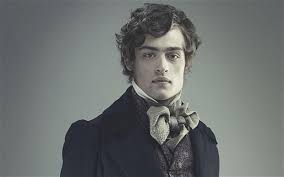
4. Describe a minimum of ten literary elements/techniques you observed that strengthened your understanding of the author's purpose, the text's theme and/or your sense of the tone. For each, please include textual support to help illustrate the point for your readers. (Please include edition and page numbers for easy reference.)
-Metafor - “It was one of those March days when the sun shines hot and the wind blows cold: when it is summer in the light, and winter in the shade.” (122)
-Narrator - “In a word, I was too cowardly to do what I knew to be right, as I had been too cowardly to avoid doing what I knew to be wrong.” (77)
- Pip's story is his change from childhood to adulthood/ wisdom.
-to teen years-4. Describe a minimum of ten literary elements/techniques you observed that strengthened your understanding of the author's purpose, the text's theme and/or your sense of the tone. For each, please include textual support to help illustrate the point for your readers. (Please include edition and page numbers for easy reference.)
-Metafor - “It was one of those March days when the sun shines hot and the wind blows cold: when it is summer in the light, and winter in the shade.” (122)
-Narrator - “In a word, I was too cowardly to do what I knew to be right, as I had been too cowardly to avoid doing what I knew to be wrong.” (77)
-Figurative Language - “No varnish can hide the grain of the wood; and that the more varnish you put on, the more the grain will express itself.” (100)
- Climax - " did really cry in good earnest when I went to bed, to think that my expectations had done some good to somebody " (257)
CHARACTERIZATION
1. Describe two examples of direct characterization and two examples of indirect characterization. Why does the author use both approaches, and to what end (i.e., what is your lasting impression of the character as a result)?
-- Direct Characterization- It would have been cruel of Miss Havisham, horribly cruel, to practice on the susceptibility of a poor boy, and to torture me through all these years with a vain hope and an idle pursuit, if she had reflected on the gravity of what she did. But I think she did not. I think that in the endurance of her own trial, she forgot mine, Estella (378)
- Climax - " did really cry in good earnest when I went to bed, to think that my expectations had done some good to somebody " (257)
CHARACTERIZATION
1. Describe two examples of direct characterization and two examples of indirect characterization. Why does the author use both approaches, and to what end (i.e., what is your lasting impression of the character as a result)?
-- Direct Characterization- It would have been cruel of Miss Havisham, horribly cruel, to practice on the susceptibility of a poor boy, and to torture me through all these years with a vain hope and an idle pursuit, if she had reflected on the gravity of what she did. But I think she did not. I think that in the endurance of her own trial, she forgot mine, Estella (378)
- Indirect Characterization - “I noticed that Miss Havisham put down the jewel exactly on the spot from which she had taken it up.”
2. Does the author's syntax and/or diction change when s/he focuses on character? How? Example(s)?
-The authors syntax/diction changes depending on each character.
Magwitch is a poor man, who is a criminal and his ankles are changed. Throughout the novel you get a clear understanding that Magwitch is poorly educated.
"This is a terrible hardened one,"they says to prison wisitors,picking out of me. "May be said to live in gaols this." They always went on agen me about the Devil. But what the Devil was I to do? I must put something into my stomach, mustn't I?" Ch 42
2. Does the author's syntax and/or diction change when s/he focuses on character? How? Example(s)?
-The authors syntax/diction changes depending on each character.
Magwitch is a poor man, who is a criminal and his ankles are changed. Throughout the novel you get a clear understanding that Magwitch is poorly educated.
"This is a terrible hardened one,"they says to prison wisitors,picking out of me. "May be said to live in gaols this." They always went on agen me about the Devil. But what the Devil was I to do? I must put something into my stomach, mustn't I?" Ch 42
Criminal and poor English skills
- Estella is much more educated and of high class. She makes sure that she is known and when she speaks to Pip she speaks with such a sophisticated manner but with a witty sense.
3. Is the protagonist static or dynamic? Flat or round? Explain.
- Pip falling into a dynamic and round character traits, reveal his personality and his inner thoughts about his whole adventure in accomplishing his great expectations.
4. After reading the book did you come away feeling like you'd met a person or read a character? Analyze one textual example that illustrates your reaction.
- As I read this novel I had a feeling like I was inside the novel and just watching everything go past me before my very own eyes. I enjoyed reading the novel and loved the drama within it. Reading about Pip's journey in finding himself is an experience to feel, because it was expressed very differently, especially in that time and country. Gave me another understanding of how everyone's journey in discovering themselves is totally different. Interesting is a good word to describe it all.
- Pip falling into a dynamic and round character traits, reveal his personality and his inner thoughts about his whole adventure in accomplishing his great expectations.
4. After reading the book did you come away feeling like you'd met a person or read a character? Analyze one textual example that illustrates your reaction.
- As I read this novel I had a feeling like I was inside the novel and just watching everything go past me before my very own eyes. I enjoyed reading the novel and loved the drama within it. Reading about Pip's journey in finding himself is an experience to feel, because it was expressed very differently, especially in that time and country. Gave me another understanding of how everyone's journey in discovering themselves is totally different. Interesting is a good word to describe it all.
Sunday, February 3, 2013
THE TIME OF MY LIFE
THE TIME OF MY LIFE
Friday's class was productive. wr talked about the novel that we are reading, Great Expectations, and we clearified some information that wasn't so understanding to us.
Tuesday, January 29, 2013
Whats the story?
1) He lived a hard life growing up in London and he expresses a lot of his emotions through his novels. His emotions are hidden with in the characters personalities and they come out as the character comes to life. I read the biography of Dickens and I also read summaries of the novel to help have a better understanding. Also Dr. Preston's lecture gave more of an explanation of Dickens reason behind the novel.
LECTURE NOTES
- London and Paris during the Revolution
- Frozen Deep (18..) First novel
- Sydne Carton - talented, sacrifices himself for love so she can be happily with her husband.
- Carton was originally going to be named Dick or Richard ( Dick an eco of Richard Wardo of The Frozen Deep) Parallelism *
- 1858 public readings for profit
- London and Paris in Tail of Two Cities
- Experiences gave him an extensive and peculiar knowledge of the city.. He knew it all, place of rancidness and darkness as well as knowledge.
- London was his inspiration to keep writing.
- London was a labyrinth city of extremes in wealth and poverty
- 1854 visits Paris
- His visualization of both these cities would have to be that great use of location
- MORE NOTES TO COME..
LECTURE NOTES
- London and Paris during the Revolution
- Frozen Deep (18..) First novel
- Sydne Carton - talented, sacrifices himself for love so she can be happily with her husband.
- Carton was originally going to be named Dick or Richard ( Dick an eco of Richard Wardo of The Frozen Deep) Parallelism *
- 1858 public readings for profit
- London and Paris in Tail of Two Cities
- Experiences gave him an extensive and peculiar knowledge of the city.. He knew it all, place of rancidness and darkness as well as knowledge.
- London was his inspiration to keep writing.
- London was a labyrinth city of extremes in wealth and poverty
- 1854 visits Paris
- His visualization of both these cities would have to be that great use of location
- MORE NOTES TO COME..
Dickens Map
1) In order to finish I am going to need to be reading like crazy so I can finish on time and be on track with class discussions.
http://charlesdickenspage.com/expectations.html <--- I also found this cool site with info on Dickens and the novel itself! Helpful!
- Lines 23 through 28 are an example of..
(Passage given by clicking on link) https://sites.google.com/site/mrpipsgreatexpectations/home/ap-style-multiple-choice
- Why do you think this novel divided into three parts?
http://www.shmoop.com/great-expectations/questions.html
- What largely motivates Pip's struggle for social advancement?
http://www.funnelbrain.com/c-6179-largely-motivates-pip-s-struggle-for-social-advancement.html
- How does Estella appear to Pip in contrast to his visit to the prison?
http://www.victorianweb.org/authors/dickens/ge/pva107.html
- In the final chapter, Estella says to Pip: "Suffering has been stronger than all other teaching." Discuss the theme of suffering in this book—specifically how it instructs Pip, Miss Havisham and Estella.Read more: http://www.oprah.com/oprahsbookclub/Great-Expectations-by-Charles-Dickens-Reading-Questions#ixzz2JR506c31
3) Cutting up the novel into sections and just giving explanations on our blog, using remix or just simply write out a summary. movies are sometimes nice to watch but they do not share sufficient amount of information as the novel displays.
Thursday, January 24, 2013
Smart Goal
My smart goal would have to be is graduate High School with the best GPA possible and receive as many scholarships as I can. I want to end my last year in High School as strong as I can! If it means even later nights to stay up to complete the homework's then bring it on. My biggest goal would have to be is graduate from college with a Business degree and work for a international company where they will allow me to travel all over Latin America. I am the type of person who loves to experience new things and like to live risky, so a good adrenalin rush activity is always up my alley. I have a bucket list that i am slowly going to be crossing off items within the next few years. :)
Wednesday, January 23, 2013
Lit Terms 1- 135
1. Allegory: a tale in prose or verse in which characters, actions, or settings represent abstract ideas or moral qualities; a story that uses symbols to make a point
2. Alliteration: the repetition of similar initial sounds, usually consonants, in a group of words
3. Allusion: a reference to a person, a place, an event, or a literary work that a writer expects a reader to recognize
4. Ambiguity: something uncertain as to interpretation
5. Anachronism: something that shows up in the wrong place or the wrong time
6. Analogy- comparison between two things to show the similarities between them.
7. Analysis- method in which a work or idea is separated into its parts; and those parts given rigorous and detailed scrutiny.
8. Anaphora- a device or repetition in which a word or words are repeated at the beginning of two or more lines, phrases, clauses, or sentences.
9. Anecdote- short story to illustrate a point
10. Antagonist- person or force opposing the protagonist in a drama or narrative
11. Antithesis- balancing of one term against another for emphasis stylistic effectiveness
12. Aphorism- a terse, point statement expressing some wise or clever observation about life.
13. Apologia- a defense or justification for some doctrine, piece of writing cause, or action, also apology
14. Apostrophe- figure of speech in which an absent or dead person, an abstract quality, or something inanimate or nonhuman is addressed directly
15. Argument(ation) - the process of convincing a reader by providing either the truth or the falsity of an idea or proposition; also the thesis or proposition itself.
16. Assumption - the act of supposing or taking for granted that a thing is true.
17. Audience - the intended listener or listener.
18. Characterization - the means by which a writer reveals the character's personality
19. Chiasmus - a reversal in the words so that the second half of a statement balances the first half in inverted order
20. Circumlocution - a roundabout or evasive speech or writing in which many words are used but a few would have served.
21. Classicism - art, literature, music reflecting the principles of ancient Greece and Rome tradition, reason, clarity, order and and balance.
22. Cliche - phrase or situation overused within society
16. Assumption - the act of supposing or taking for granted that a thing is true.
17. Audience - the intended listener or listener.
18. Characterization - the means by which a writer reveals the character's personality
19. Chiasmus - a reversal in the words so that the second half of a statement balances the first half in inverted order
20. Circumlocution - a roundabout or evasive speech or writing in which many words are used but a few would have served.
21. Classicism - art, literature, music reflecting the principles of ancient Greece and Rome tradition, reason, clarity, order and and balance.
22. Cliche - phrase or situation overused within society
23. Climax- the decisive point in a narrative or drama; the point of the greatest intensity or interest at which plot question or answer is resolved
24. Colloquialism- folksy speech, slang words or phrases usually used in informal conversation
24. Colloquialism- folksy speech, slang words or phrases usually used in informal conversation
27. Connotation: implicit meaning, going beyond dictionary definition
28. Contrast: a rhetorical device by which one element (idea or object) is thrown into opposition to another for the sake of emphasis or clarity
29. Denotation: plain dictionary definition
30. Denouement (pronounced day-new-mahn): loose ends tied up in a story after the climax, closure, conclusion
31. Dialect: the language of a particular district, class or group of persons; the sounds, grammar, and diction employed by people distinguished from others.
32. Dialectics: formal debates usually over the nature of truth.
33. Dichotomy: split or break between two opposing things.
34. Diction: the style of speaking or writing as reflected in the choice words
36. Dogmatic: rigid in beliefs and principles
37. Elegy: a mournful, melancholy poem, especially a funeral song or lament for the dead, sometimes contains general reflections on death, often with a rural or pastoral setting.
38. Epic: a long narrative poem unified by a hero who reflects the customs, mores, and aspirations of his nation of race as he makes his way through legendary and historic exploits, usually over a long period of time (definition bordering on circumlocution).
39. Epigram: witty aphorism.
41. Evocative (evocation): a calling forth of memories and sensations; the suggestion or production through artistry and imagination of a sense of reality.
42. Exposition: beginning of a story that sets forth facts, ideas, and/or characters, in a detailed explanation.
43. Expressionism: movement in art, literature, and music consisting of unrealistic representation of an inner idea or feeling(s).
44. Fable: a short, simple story, usually with animals as characters, designed to teach a moral truth.
45. Fallacy: from Latin word “to deceive”, a false or misleading notion, belief, or argument; any kind of erroneous reasoning that makes arguments unsound.
46. Falling Action: part of the narrative or drama after the climax.
47. Farce: a boisterous comedy involving ludicrous action and dialogue.
48. Figurative Language: apt and imaginative language characterized by figures of speech (such as metaphor and simile).
49. Flashback: a narrative device that flashes back to prior events
50. Foil: a person or thing that contrast, makes another seem better or more prominent
51. Folk Tale: story passed on by word of mouth
52. Foreshadowing: in fiction and drama, a device to prepare the outcome of the action; "planning" to make the outcome convincing, though not to give it away.
53. Free verse: verse with out metrical pattern, with irregular pattern or no rhyme
54. Genre: a category or class of artistic endeavor having a particular form, technique or content
55.Gothic Tale: a style in literature characterized by gloomy, violent or grotesque action, and a mood of decay, degeneration, and decadence
56. Hyperbole: a exaggerated statement often used as a figurative speech, or to prove a point
57. Imagery: figures of speech or vivid description, conveying images through any of the senses
58. Implications: a meaning or understanding that is to be arrive at by the reader but that is not fully explicitly stated by the author
59. Incongruity: the deliberate joining of opposites or of elements that are not appropriate to others
60. Inference: Judgement or conclusion based on evidence presented; the forming of an opinion in which possesses probability according to facts already available
61. Irony: a contrast or incongruity between what is said and what is meant, or what is expected to happen and what actually happens, or what is thought to be happening and what is actually happening.
62. Interior Monologue: a form of writing which represents the inner thoughts of a character; the recording of the internal, emotional experience(s) of an individual; generally the reader is given the impression of overhearing the interior monologue.
63. Inversion: words out of order for emphasis.
Juxtaposition: the intentional placement of a word, phrase, sentences of paragraph to contrast with another nearby.
64. Lyric: a poem having musical form and quality; a short outburst of the author’s innermost thoughts and feelings.
65. Magic(al) Realism: a genre developed in Latin America which juxtaposes the everyday with the marvelous or magical.
66. Metaphor(extended, controlling, and mixed): an analogy that compare two differentthings imaginatively.
67. Extended: a metaphor that is extended or developed as far as the writerwants to take it.
68. Controlling: a metaphor that runs throughout the piece of work.
69. Mixed: a metaphor that ineffectively blends two or more analogies.
70. Metonymy: literally “name changing” a device of figurative language in which the name of an attribute or associated thing is substituted for the usual name of a thing.
71. Mode of Discourse: argument (persuasion), narration, description, and exposition.
72. Modernism: literary movement characterized by stylistic experimentation, rejection of tradition, interest in symbolism and psychology
73. Monologue: an extended speech by a character in a play, short story, novel, or narrative poem.
74. Mood: the predominating atmosphere evoked by a literary piece.
75. Motif: a recurring feature (name, image, or phrase) in a piece of literature.
76. Myth: a story, often about immortals, and sometimes connected with religious rituals, that attempts to give meaning to the mysteries of the world.
77. Narrative: a story or description of events.
79. Naturalism: extreme form of realism.
80. Novella: short story; short prose narrative, often satirical.
81. Omniscient Point of View: knowing all things, usually the third person.
82. Onomatopoeia: use of a word whose sound in some degree imitates or suggests itsmeaning.
83. Oxymoron: a figure of speech in which two contradicting words or phrases are combined to produce a rhetorical effect by means of a concise paradox.
84. Pacing: rate of movement; tempo.
85. Parable: a story designed to convey some religious principle, moral lesson, or general truth.
86. Paradox: a statement apparently self-contradictory or absurd but really containing a possible truth; an opinion contrary to generally accepted ideas.
87.Parallelism: the principle in sentence structure that states elements of equal function should have equal form.
89. Parody: an imitation of mimicking of a composition or of the style of a well-known artist.
90. Pathos: the ability in literature to call forth feelings of pity, compassion, and/or sadness.
91. Pedantry: a display of learning for its own sake.
92. Personification: a figure of speech attributing human qualities to inanimate objects or abstract ideas.
93. Plot: a plan or scheme to accomplish a purpose.
94. Poignant: eliciting sorrow or sentiment.
95. Point of View: the attitude unifying any oral or written argumentation; in description, the physical point from which the observer views what he is describing.
96. Postmodernism: literature characterized by experimentation, irony, nontraditional forms, multiple meanings, playfulness and a blurred boundary between real and imaginary.
97. Prose: the ordinary form of spoken and written language; language that does not have a regular rhyme pattern.
98. Protagonist: the central character in a work of fiction; opposes antagonist.
99. Pun: play on words; the humorous use of a word emphasizing different meanings or applications.
100. Purpose: the intended result wished by an author
101. Realism: writing about the ordinary aspects of life in a straightfoward manner to reflect life as it actually is.
102. Refrain: a phrase or verse recurring at intervals in
103. Romanticism: movement in western culture beginning in the eighteenth and peaking in the nineteenth century as a revolt against Classicism; imagination was valued over reason and fact.
104. Requiem: any chant, dirge, hymn, or musical service for the dead.
105. Resolution: point in a literary work at which the chief dramatic complication is worked out; denouement.
106. Restatement: idea repeated for emphasis.
107. Rhetoric: use of language, both written and verbal in order to persuade.
108. Rhetorical Question: question suggesting its own answer or not requiring an answer; used in argument or persuasion
108. Rising Action: plot build up, caused by conflict and complications, advancement towards climax.
109. Romanticism: movement in western culture beginning in the eighteenth and peaking in the nineteenth century as a revolt against Classicism; imagination was valued over reason and fact.
110. Satire: ridicules or condemns the weakness and wrong doings of individuals, groups, institutions, or humanity in general.
111. Scansion: the analysis of verse in terms of meter.
112. Setting: the time and place in which events in a short story, novel, play, or narrative poem occur.
113. Simile: a figure of speech comparing two essentially unlike things through the use of a specific word of comparison.
114. Soliloquy: an extended speech, usually in a drama, delivered by a character alone on stage.
115. Spiritual: a folk song, usually on a religious theme.
116. Speaker: a narrator, the one speaking.
117. Stereotype: cliché; a simplified, standardized conception with a special meaning and appeal for members of a group; a formula story.
118. Stream of Consciousness: the style of writing that attempts to imitate the natural flow of a character’s thoughts, feelings, reflections, memories, and mental images, as the character experiences them.
119. Structure: the planned framework of a literary selection; its apparent organization.
120. Style: the manner of putting thoughts into words; a characteristic way of writing or speaking.
121. Subordination: the couching of less important ideas in less important structures of language.
122. Surrealism: a style in literature and painting that stresses the subconscious or the nonrational aspects of man’s existence characterized by the juxtaposition of the bizarre and the banal.
123. Suspension of Disbelief: suspend not believing in order to enjoy it.
124. Symbol: something which stands for something else, yet has a meaning of its own.
125. Synesthesia: the use of one sense to convey the experience of another sense.
126. Synecdoche: another form of name changing, in which a part stands for the whole.
127. Syntax: the arrangement and grammatical relations of words in a sentence.
128. Theme: main idea of the story; its message(s).
129. Thesis: a proposition for consideration, especially one to be discussed and provedor disproved; the main idea.
130. Tone: the devices used to create the mood and atmosphere of a literary work; the author’s perceived point of view.
131. Tongue in Cheek: a type of humor
in which the speaker feigns seriousness; a.k.a. “dry” or “dead pan”
132. Tragedy: in literature: any composition with a somber theme carried to a disastrous conclusion; a fatal event; protagonist usually is heroic but tragically (fatally) flawed
133. Understatement: opposite of hyperbole; saying less than you mean for emphasis
134. Vernacular: everyday speech
135.Voice: The textual features, such as diction and sentence structures, that convey a writer’s or speaker’s persona.
100. Purpose: the intended result wished by an author
101. Realism: writing about the ordinary aspects of life in a straightfoward manner to reflect life as it actually is.
102. Refrain: a phrase or verse recurring at intervals in
103. Romanticism: movement in western culture beginning in the eighteenth and peaking in the nineteenth century as a revolt against Classicism; imagination was valued over reason and fact.
104. Requiem: any chant, dirge, hymn, or musical service for the dead.
105. Resolution: point in a literary work at which the chief dramatic complication is worked out; denouement.
106. Restatement: idea repeated for emphasis.
107. Rhetoric: use of language, both written and verbal in order to persuade.
108. Rhetorical Question: question suggesting its own answer or not requiring an answer; used in argument or persuasion
108. Rising Action: plot build up, caused by conflict and complications, advancement towards climax.
109. Romanticism: movement in western culture beginning in the eighteenth and peaking in the nineteenth century as a revolt against Classicism; imagination was valued over reason and fact.
110. Satire: ridicules or condemns the weakness and wrong doings of individuals, groups, institutions, or humanity in general.
111. Scansion: the analysis of verse in terms of meter.
112. Setting: the time and place in which events in a short story, novel, play, or narrative poem occur.
113. Simile: a figure of speech comparing two essentially unlike things through the use of a specific word of comparison.
114. Soliloquy: an extended speech, usually in a drama, delivered by a character alone on stage.
115. Spiritual: a folk song, usually on a religious theme.
116. Speaker: a narrator, the one speaking.
117. Stereotype: cliché; a simplified, standardized conception with a special meaning and appeal for members of a group; a formula story.
118. Stream of Consciousness: the style of writing that attempts to imitate the natural flow of a character’s thoughts, feelings, reflections, memories, and mental images, as the character experiences them.
119. Structure: the planned framework of a literary selection; its apparent organization.
120. Style: the manner of putting thoughts into words; a characteristic way of writing or speaking.
121. Subordination: the couching of less important ideas in less important structures of language.
122. Surrealism: a style in literature and painting that stresses the subconscious or the nonrational aspects of man’s existence characterized by the juxtaposition of the bizarre and the banal.
123. Suspension of Disbelief: suspend not believing in order to enjoy it.
124. Symbol: something which stands for something else, yet has a meaning of its own.
125. Synesthesia: the use of one sense to convey the experience of another sense.
126. Synecdoche: another form of name changing, in which a part stands for the whole.
127. Syntax: the arrangement and grammatical relations of words in a sentence.
128. Theme: main idea of the story; its message(s).
129. Thesis: a proposition for consideration, especially one to be discussed and provedor disproved; the main idea.
130. Tone: the devices used to create the mood and atmosphere of a literary work; the author’s perceived point of view.
131. Tongue in Cheek: a type of humor
in which the speaker feigns seriousness; a.k.a. “dry” or “dead pan”
132. Tragedy: in literature: any composition with a somber theme carried to a disastrous conclusion; a fatal event; protagonist usually is heroic but tragically (fatally) flawed
133. Understatement: opposite of hyperbole; saying less than you mean for emphasis
134. Vernacular: everyday speech
135.Voice: The textual features, such as diction and sentence structures, that convey a writer’s or speaker’s persona.
136. Zeitgeist: the feeling of a particular era in history
Subscribe to:
Posts (Atom)